
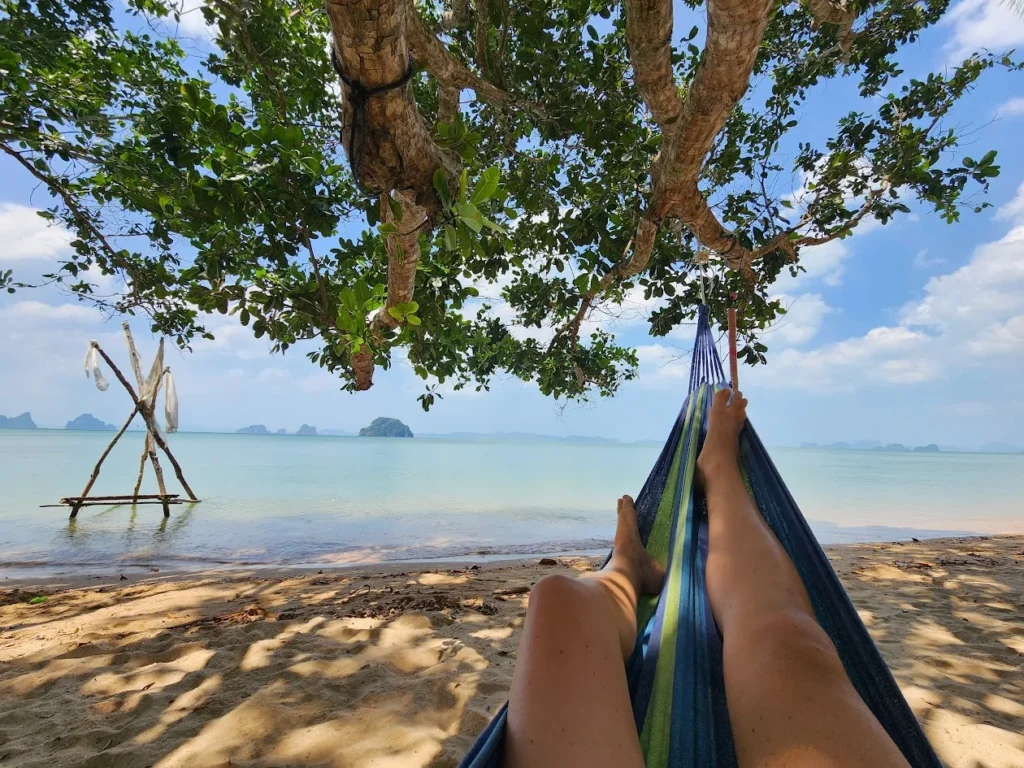
After bouncing between Bali and Thailand the last couple of years and now settling in for a year-long stay in Thailand, we’ve had plenty of time to compare how these two Southeast Asian travel hotspots stack up for daily family life.
Both are dreamy in their own ways, and have their own pros and cons, but when you’re living or traveling with a baby/toddler, the lens shifts. It’s less about spicy margs on the beach and infinity pools, and more about nap schedules, mozzies, washing machines, and whether there’s a decent playground nearby.
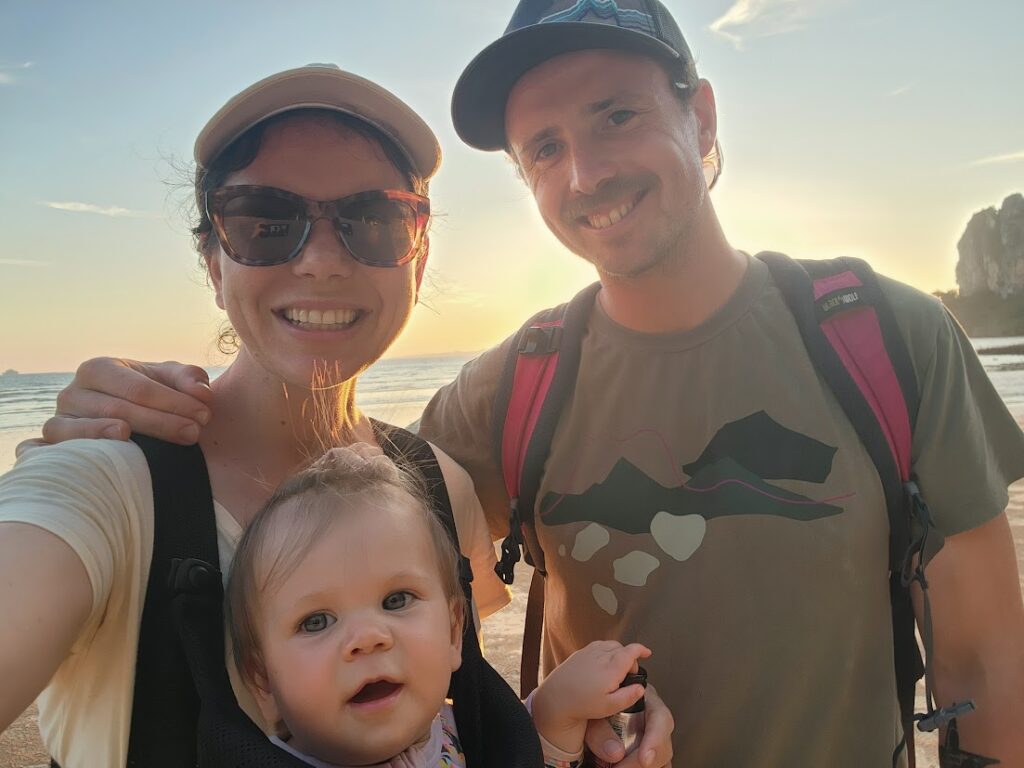
Here’s our real-life cost of living breakdown for families, straight from the road.
Accommodation: Resort Vibes vs. Private Villa
Bali – Double Six (Legian/Seminyak Border)
Most recently in Bali, we stayed at Furama Xclusive Seminyak, in a resort-style apartment with two bedrooms, two bathrooms, a kitchen, and a spacious living area – plus all the perks: kids’ pool, indoor play center, spa, and room service.
Cost: $100 per couple per night (30% discount for booking early, non-refundable). We shared the cost with Jacob’s sister to get the bigger space at a lower cost. It felt fair, but also more like being a guest than being “at home.”
Thailand – Ao Nang & Chong Phli
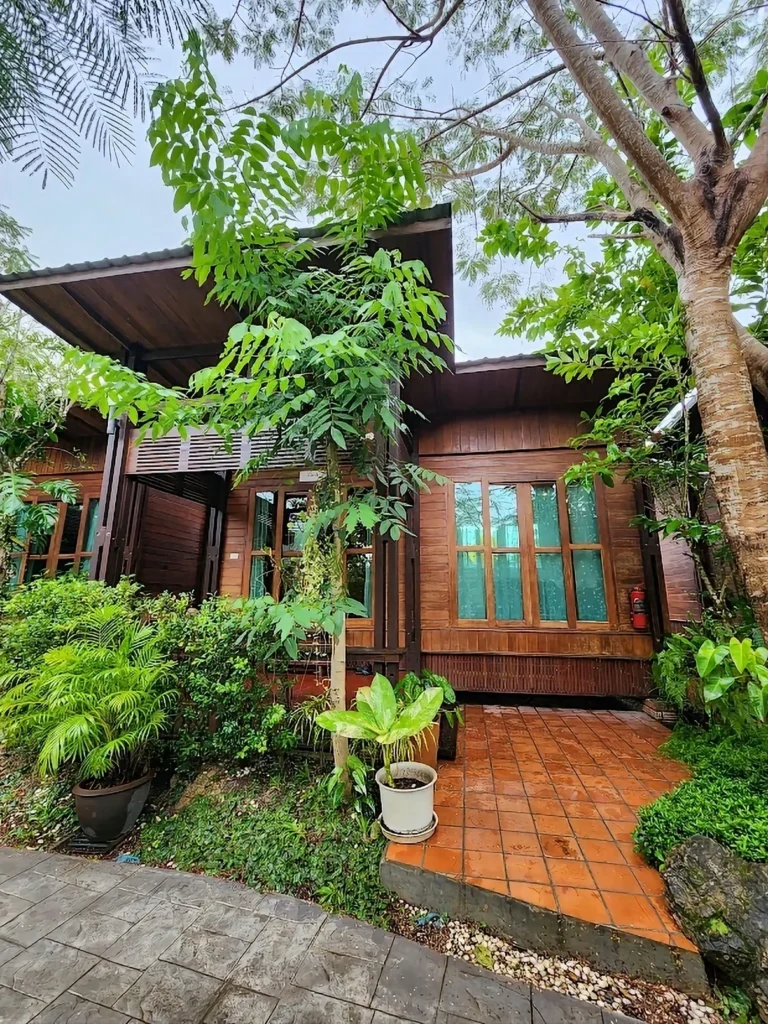
Currently in Thailand, we’re living in a two-bedroom villa in Chong Phli (10 minutes from Ao Nang Beach). It’s quiet, surrounded by jungle greenery, and has a private pool – Kaia’s dream and totally necessary with the humidity. The layout is similar to Bali’s setup but with more space, natural light, and no hotel staff around.
Cost: Similar price range depending on season. With an extended lease rather than a daily or weekly rate, the price does come down – but honestly, the feel is much more important. This villa feels like “real life” instead of resort living.
Booking Tip: For short stays, we use Booking.com (reliable + best rates) and always book through ShopBack for 5–10% cashback (referral code: HRKE7g). For longer stays, we book a week or two online, then scout in person on the ground – usually much cheaper outside peak season.
For more details on how we find long-term accommodation in Thailand, check out our blog here!
Dining: Authentic Flavours vs. Western Influence
Bali
Bali has embraced a big wave of Western café culture. Smoothie bowls, oat lattes, and sourdough are everywhere and often at Western prices. The traditional warungs and street food stalls are still around, but you may have to wander a little further to find them.
It wasn’t uncommon to pay $7 for a coffee (plus the “++” tax/service charge of 15–20%). It felt kinda rude and definitely adds up fast.
Thailand
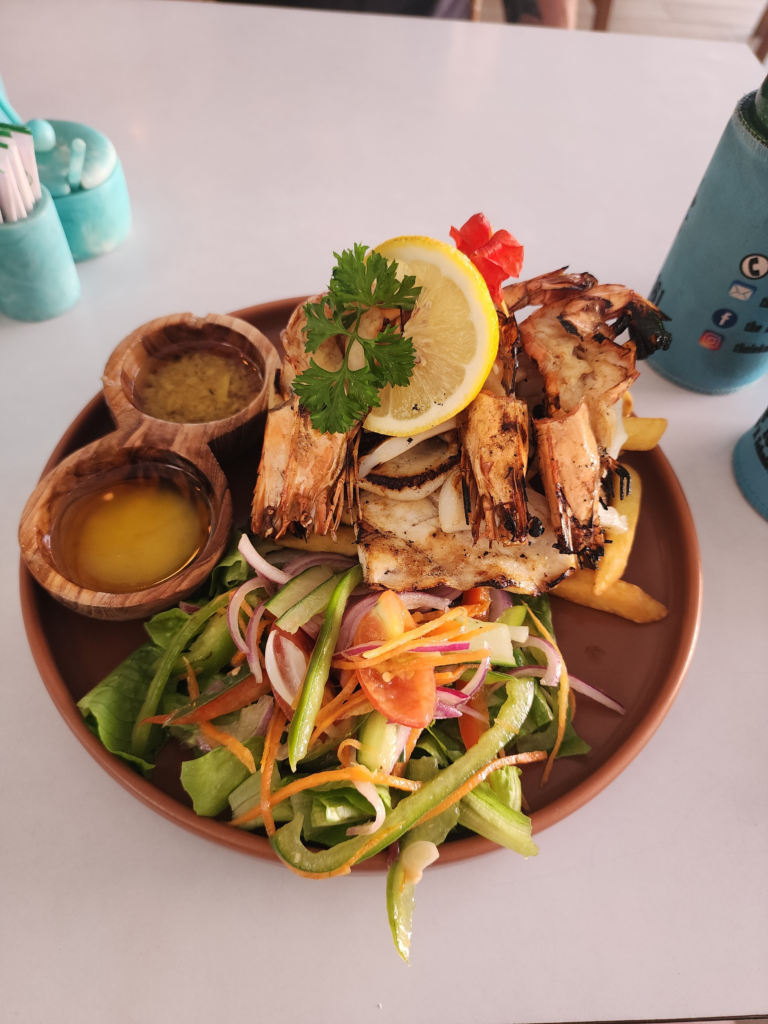
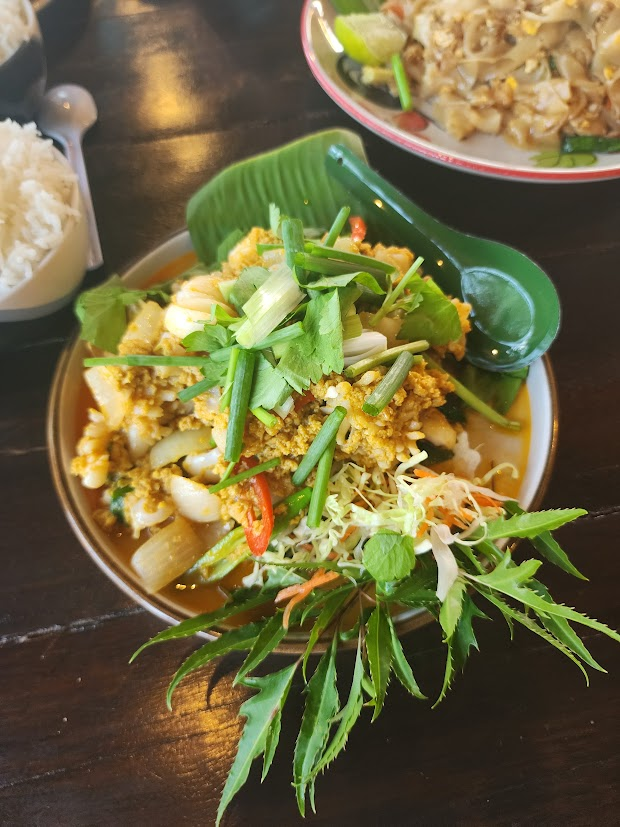
Thailand is still gloriously local. From roadside som tum to a delicious Penang curry for under $4, the food feels authentic and affordable. No hidden “++” charges either – the price you see is nearly always the price you pay.
Our go-to dishes:
- Thai basil with crispy pork
- Tom Yum Gai
- Penang curry
- Kaia’s fave → pineapple fried rice served in an actual pineapple

Grocery Shopping: Markets vs. Minimarts
Bali
We mainly used Bintang Supermarket for affordable basics (generally cheaper than minimarts). Imported goods are steep – one avocado can cost $3+.
Thailand
In Thailand we do big shops at Makro (meat + pantry) and get fresh fruit and veg from roadside stalls and weekly local markets (cheaper, fresher, supports local farmers).
PS: 7-Eleven Thailand is iconic. It’s locally owned, has great iced coffee for under $2, and the toasties (chicken + cheese on nugget-like bread = 11/10.
Transport: Scooters, Grabs, and Taxis
Bali
Grab, Gojek, and Bluebird taxis are readily available and cheap. Short rides: $3–$5. Airport runs: around $13 (watch for inflated taxi quotes).
At the airport, there’s an official taxi stand with fixed rates – pricier than Grab, but useful if you prefer a “reliable” taxi. Just don’t get pulled aside by unofficial drivers on your way there.
We always take Grab from the airport – easy, cheap, stress-free. There’s a designated pickup area and we always recommend tipping your driver.
Thailand
We usually rent a scooter long-term for 140 Baht ($6) a day. This cost will increase to 200-400 Baht for shorter stays and in high season so make sure you shop around! Kaia loves it, and there’s nothing like cruising with the wind in your hair.
For our 12-month stay, we bought a car – used cars here are significantly cheaper than in Australia and worth it for longer drives and exploring.
Grabs and taxis are available too. Example: Krabi Airport → Ao Nang taxi was 600 Baht, bargained down to 400 ($17). Remember everything is (respectfully) negotiable.
Laundry: Resort Services vs. In-Villa Washing
Bali: Local laundry via WhatsApp = <$2 per kilo with pick-up/drop-off. Resort laundry is always overpriced. We hand-washed often, but drying was tricky in the humidity.
Thailand: We pay ~50 Baht ($2.50) per kilo at resorts/street laundries, or ~30 Baht per load at coin machines. Our villa has its own washing machine which is perfect for us.
Child-Friendly Vibes
Both Bali and Thailand are family-first countries, super welcoming to kids. Kaia gets endless smiles, high-fives, and attention – sometimes overwhelming, but we balance cultural respect with our own boundaries.
Bali: Resorts often include kids’ clubs and shallow pools. Cafés with small play areas are on the rise. Playgrounds are rare. Nannies are common and easy to hire.
Thailand: More low-key, but still very family-friendly. Krabi has one huge local playground and a couple of indoor/outdoor play cafés. Playgrounds are less common than in places like Türkiye. Nannies are harder to find here.
Routine & Lifestyle
Bali: Routine was hard. Family visits + humidity = late naps/bedtimes. Overstimulated toddler = overtired parents. Traffic and chaos added to the stress.
Thailand: We’ve found our rhythm. Climbing every second day, family meals, early dinners. The one-hour time difference from Perth was an easy adjustment. Smaller-town vibe = calmer.
Cost of Living: The Numbers
Bali: Inflation is climbing. As of July 2024, year-on-year inflation was 2.53% (food + dining). (Source: bali.bps.go.id, The Bali Sun).
Thailand: Inflation was just 0.4% in 2024, the lowest in four years, thanks to government subsidies on essentials. (Source: Bangkok Post).
Exchange Rates
Bali: 1 AUD ≈ 10,000 IDR (fairly stable).
Thailand: 1 AUD dropped from 24 Baht to 21 Baht in a 12-month period, reducing buying power.
Our Affiliate Recs (Stuff We Use)
- ShopBack → Cashback on travel + everyday stuff. Code: HRKE7g for $10 in your account
- Airalo eSIM → Easy, affordable internet anywhere. Code: RENEE7796 for discount (double dip on cashback – use Airalo through ShopBack).
- Booking.com → Our go-to for short stays.
- NordVPN → For safe banking/streaming on public Wi-Fi. (double dip on cashback – use NordVPN through ShopBack).
- Baby Sleep Program → Nicola’s one-on-one consult helped us build a flexible baby/toddler sleep routine that actually worked.
You can also read more in my Travel With Baby Essentials blog post.
Final Thoughts
Both Bali and Thailand have huge appeal.
- Bali → fun, social, resort-y, but pricier and chaotic.
- Thailand → calmer, cheaper, more toddler-friendly for our lifestyle right now.
If you’re deciding between the two for long-term family travel, I hope that you give both a go! and that this gives you some real-world context (beyond what Instagram reels show).
Got questions about staying in Bali or Thailand with kids? Drop a comment below or connect with us on Instagram @the.froth.family.
Til next time,
R